Fishing Field GuideNew Jersey issue
Issue 02 · Ridge to surf

New
Jersey

Freshwater, tidal rivers and the coast demand different reads—but all concentrate fish where water, depth and cover change.

FreshwaterBass · trout · pickerel
CoastalStriper · fluke · bluefish
Key structureSeams · troughs · jetties
TimingLow light + moving water

One small state, several fisheries

New Jersey changes quickly from rocky northern water to coastal marsh and surf. In freshwater, look for the first depth change, healthy vegetation, inflows and visible cover. On tidal water, make current do the locating: fish the edges of flow, not featureless water.

At the beach, read wave behavior. A darker trough, a break in the bar or water sweeping through a cut can be more valuable than casting farther.
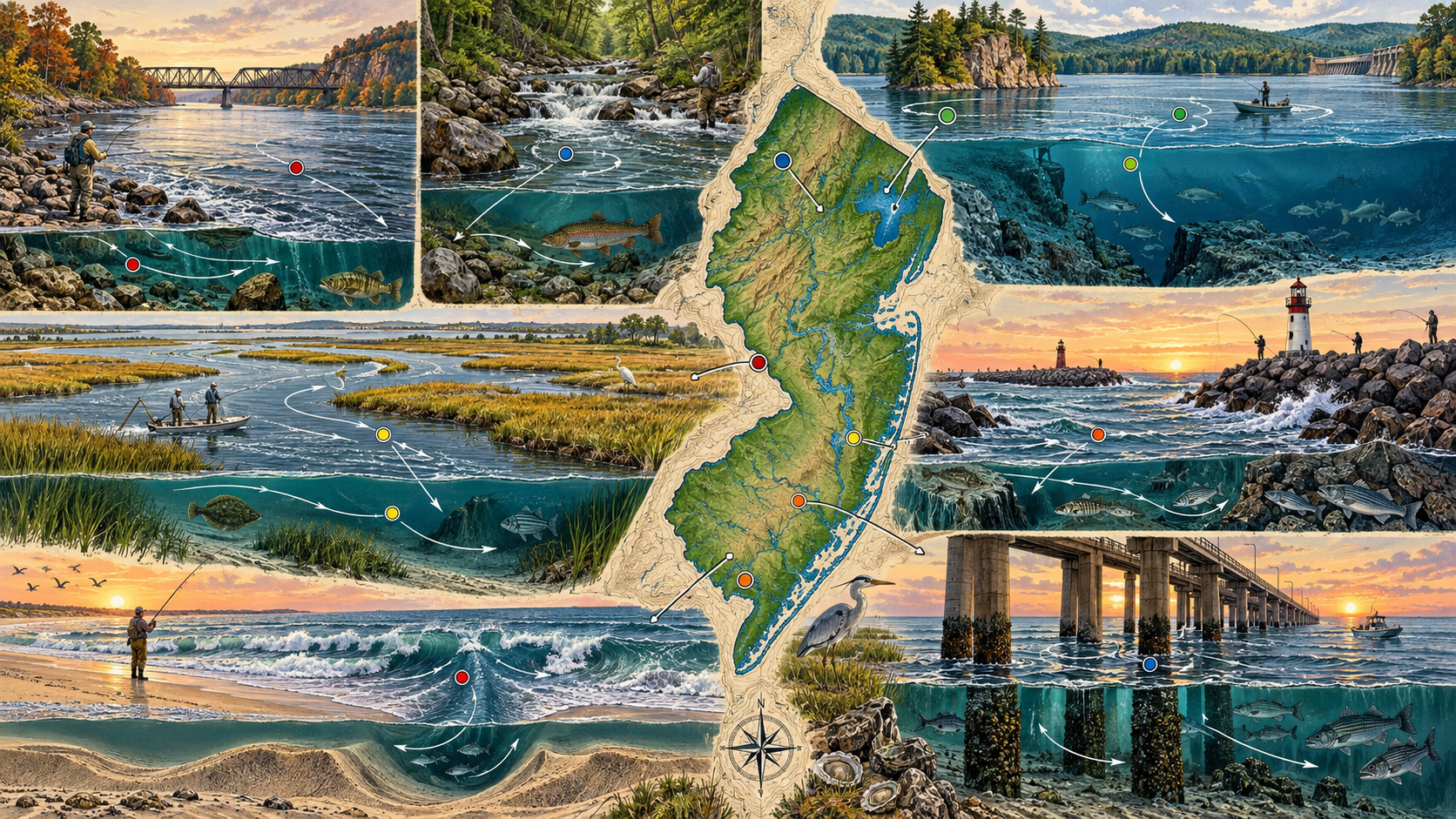
Illustrated New Jersey fishing habitat plate
Ridge-to-surf habitat plate
River

Delaware River

Current breaks, rocky transitions, tributary mouths and bridge structure deserve repeated angles. Use enough weight to maintain contact without pinning the presentation unnaturally.

Cold water

Trout streams

Begin below riffles and at the head or tail of pools. Match presentation size to clarity, and avoid casting a shadow across clear shallow water.

Still water

Reservoirs & ponds

Points, dam faces, weed edges, timber and shaded banks provide a repeatable search pattern. Fan-cast each depth band before moving.

Tidal

Back bays

Fish creek mouths and marsh drains when tide moves bait. Bridge lights and pilings create shade, current deflection and feeding lanes.

Oceanfront

Surf

Identify troughs, cuts and points by watching several wave sets. Keep tackle secure above the wash and give swimmers wide clearance.

Hard structure

Inlets & jetties

Fish the current edge and protected pocket, not the most dangerous rock. Studded footwear, flotation and conservative sea-state judgment matter.

Enlarged habitat plate