Fishing Field GuideVirginia issue
Issue 03 · Mountains to tidewater

Virginia

Blue Ridge trout, Shenandoah ledges, Piedmont reservoirs, the James and Chesapeake structure.

MountainTrout · smallmouth
ReservoirBass · crappie · catfish
TidewaterStriper · red drum · flounder
PatternCurrent + cover + depth

Follow the gradient

Virginia’s fisheries change with elevation and salinity. In the mountains, temperature, oxygen and current shape the day. Reservoir fish relate to points, timber, channels and shade. Farther east, tide and structure take command.

Choose tackle for the water in front of you. A light river setup can become unsafe or ineffective around tidal current, bridge pilings and larger fish.
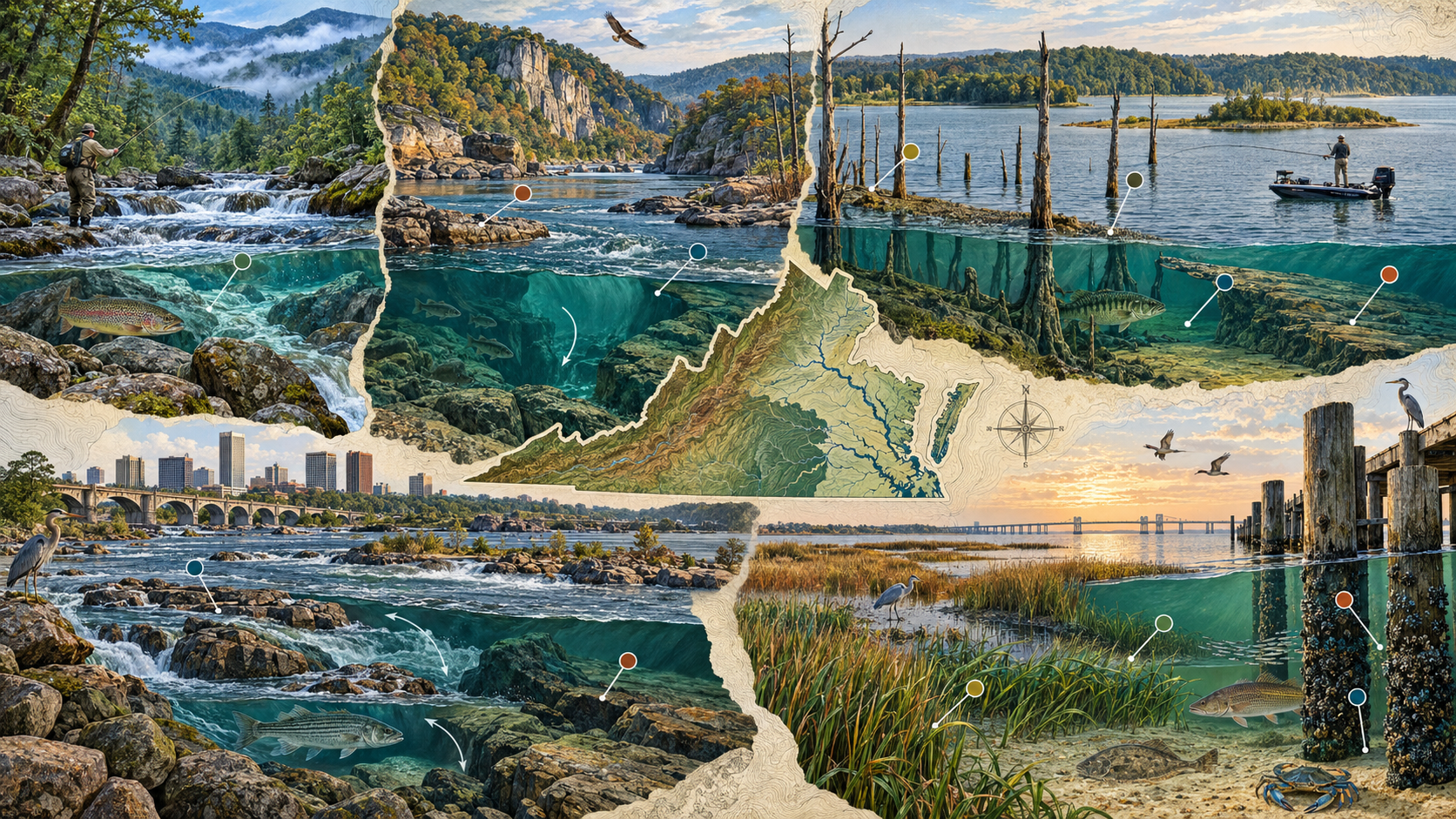
Illustrated Virginia fishing habitat plate
Mountains-to-tidewater habitat plate
Blue Ridge

Trout water

Cold inflows, shaded pockets, riffle edges and plunge pools hold fish. Use stealth, short accurate casts and controlled drifts.

Shenandoah

Smallmouth rivers

Target ledges, boulders, current seams and deeper outside bends. Let a natural presentation enter the strike zone before adding action.

Piedmont

Reservoirs

Standing timber, long points, creek channels and shaded cover offer a dependable search grid. Slow down once one depth produces.

Urban river

James River

Fish current breaks, rock fields, islands, bridge influence and deep holes. Respect rapidly changing flow and restricted areas.

Tidal James

Brackish structure

Pilings, channel edges and tributary mouths gather bait. Change weight with current so the lure stays controlled and visible.

Chesapeake

Marsh & bridge habitat

Grass edges, drains, oyster or rock transitions and bridge shade are high-percentage zones. Moving water is the central clock.

Enlarged habitat plate